“The past is another country”
All the Old Knives“The past is another country” gives language to Celia Favreau’s practiced estrangement from her own history. Recalled in conversation with Henry Pelham, the phrase connects her pleasure in discarding personal memories with her unease about what her children inherit—and with the novel’s larger problem of how a vanished past can be recovered from people’s accounts and documentary traces.
The phrase in Celia’s account
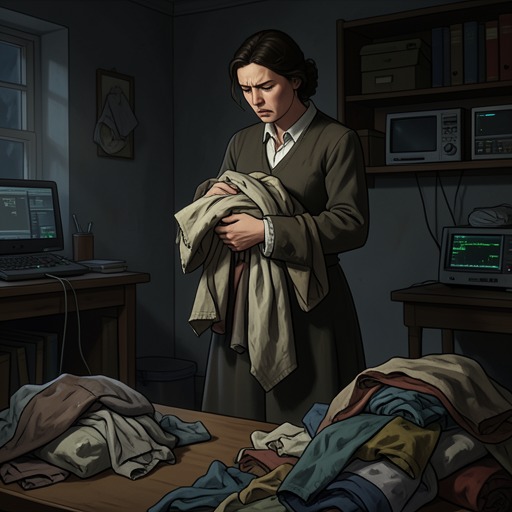
Celia describes herself as belonging to a category she tentatively calls “Jettisoners,” people who let the past go rather than preserve it. Her spare apartment on Salmgasse was, she corrects Henry, more than merely unfurnished: it was empty. With each move she pared her life back to essentials, without a parents’ attic to store childhood remnants or a rented storage unit in Queens to keep what no longer fit. The practice was deliberate. Throwing away old letters and photographs gave her pleasure because each discarded object removed a piece of her history and made embarrassing memories harder for anyone to discover.
When she reaches for the familiar image of the past as another country, Henry supplies the remembered wording: “That it’s another country?” Celia accepts his half-remembered quotation. Its force in the exchange comes from the gap between the saying’s distance and the intimacy of what she is describing: for her, the past is not an abstract foreign place but a personal archive she has repeatedly dismantled.
The inheritance she withholds
Celia is forty-five, and her children have begun asking questions about the country she has kept at a distance. She compares their situation with that of their friends, whose parents produce home movies and photo albums and invite older relatives to tell stories. Her own children, she says, are given nothing. The contrast makes her habits of erasure consequential beyond herself: what began as a way to control access to her memories has also left her children without the family history their peers receive.
Henry cannot tell whether Celia is asking about child-rearing or confessing regret about her past, and he is unsure whether she expects an answer. He responds with his own childhood as a counterexample: his family history included an abusive, alcoholic grandfather, whose guilt and violence helped make the extended family silent. Henry suggests that Celia’s children may eventually be glad not to be burdened by such connections. The exchange does not settle whether silence protects children or deprives them; instead, it sets Celia’s chosen absence beside Henry’s inherited silence, showing two different routes by which a family past can go untold.
A past reconstructed in testimony
The phrase also resonates with the form in which the Vienna events return. Celia’s account appears in an FBI transcript made from a cell-phone flash card removed from Karl Stein’s premises, within an investigation into his actions on October 16, 2012. In that recorded testimony, she begins by locating her story in December 2006 and describes Vienna’s atmosphere before identifying herself as a case officer working under William Compton. A past that she has tried to clear from her private life is thus preserved, years later, in an institutional record.
Henry’s reflections emphasize that the record is not the same as unmediated access to what happened. Listening to Celia, he notices her command of the story and contrasts it with Bill Compton’s hesitations and eventual breakdown. He also recalls Gene Wilcox, whose account of the crisis was delivered as a sequence of facts without detours or editorializing. The contrast places Celia’s fluent recollection beside other forms of remembering: strained personal testimony and the controlled recital of a data processor who had absorbed the intelligence as it arrived.
Language as a trace of what remains
The book’s investigation makes the past legible through details that survive even when people’s accounts are uncertain. Bill recalls that the station recognized a change in Ahmed’s final message but did not want to say aloud what it implied. Celia later explains that, after Bill left to be with Sally, she compared the four messages at his desk. It was not only the appeal to call off the attack because of cameras on the aircraft; the grammar had changed, and she concluded that a different person had written the last message.
That linguistic clue offers a counterpoint to Celia’s discarded letters and photographs. Personal objects can be thrown away, and memories can be shaped in the act of telling, but a change in grammar remains available for comparison. “The past is another country” therefore carries both a personal meaning—Celia’s wish to leave her history behind—and a formal one: the past is distant, yet it continues to exert pressure through testimony, records, and small traces that resist erasure.